



How to Get Your Content Boosted: A Brand-Proven Playbook
Discover Index
Index
Afficher plus
Afficher moins

The Creator’s Guide to Instagram Right Now
 9
mn
9
mn
par
Han Li

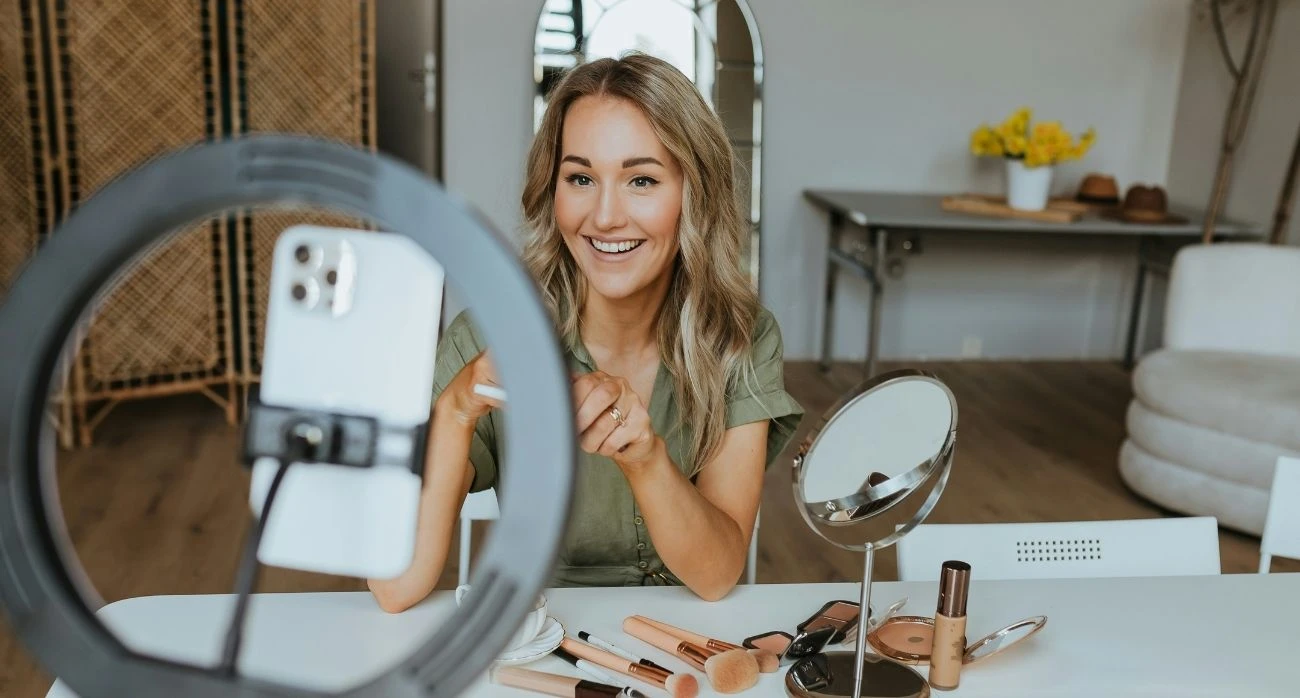
Instagram has gone through more changes in the past year than it has in a long time, and if you’re still operating on strategies from two years ago, your reach is probably showing it.
This guide is written to help you with just that. No fluff, no vague advice like “post consistently.” Just an honest breakdown of what’s actually happening on the platform right now, what content is getting pushed, and how to stay visible without running yourself into the ground.
Instagram Right Now
The Algorithm Is Not Your Enemy
Here is the thing about the Instagram algorithm in 2026, it is not trying to work against you. It is trying to predict what people will want to watch and share next. Your job is to give it the signals it needs to make that prediction in your favor.
Right now, the three metrics that matter most for distribution are:
- Watch time. How long are people actually staying with your content? This is the foundation. Everything else builds on it.
- Sends per reach. When someone DMs your post to a friend, Instagram treats that as a massive vote of confidence. Shares via DM are weighted three to five times higher than likes. If you are not thinking about “is this shareable?” before you post, start now.
- Likes per reach. This one still counts, but it’s no longer the headline number. Think of it as a supporting signal.
The algorithm also runs differently depending on where your content lives. Feed posts, Stories, Reels, and Explore each have their own ranking system. What works in one place won’t automatically translate to another, which is why understanding each format matters.
How to Actually Keep Up With What’s Changing
The algorithm is always shifting, and no single article (including this one) will be the last word on it. Here’s how to stay informed without spending half your day doom-scrolling industry blogs:
- Follow Adam Mosseri directly. He is the head of Instagram and regularly posts updates about what the platform is prioritizing. His account is @mosseri and it is one of the most reliable sources of platform news.
- Check the Instagram for Creators account. @Creators posts tips, format guides, and updates straight from the platform. Bookmark it.
- Use Later, Buffer, or Hootsuite’s blogs. These platforms invest heavily in tracking algorithm changes and publish updated guides regularly. Worth checking once or twice a month.
- Pay attention to your own analytics. Your account is a data source. When something unexpected performs well or tanks, that’s the algorithm telling you something.
The Originality Push Is Real
In early 2026, Instagram made its biggest stance yet on original content. The platform updated its algorithm and its official Original Content Guidelines to make sure original creators get more reach. Aggregators and repost accounts get less.
Here is what this means in practice:
- Accounts that post 10 or more reposts within a 30 day window can be excluded from recommendations entirely.
- Content labeled as reposted gets reduced distribution automatically.
- Original content is now receiving 40 to 60 percent more distribution than reshared posts.
Instagram defines original content as:
- Content you captured or created yourself.
- Designed visuals, guides, or storytelling formats that are distinctly yours.
- Posts where you’ve substantially edited or transformed existing material in a way that adds real value.
What does NOT count as original:
- Adding a watermark to someone else’s content.
- Speeding up or slowing down a clip.
- Cross posting directly from TikTok with the TikTok logo visible (this will actively suppress your reach).
- Screenshotting another creator’s post.
How Content Gets Seen
What Formats Are Actually Performing Right Now
Not all content is treated equally on Instagram. Here is the honest breakdown of what the platform is currently pushing:
- Reels are still king for reach. They make up 50 percent of the time people spend inside the app, and Instagram’s entire discovery system is built around them. If you want to reach people who don’t already follow you, Reels are your best tool.
- Carousels are having a serious moment. Carousels with original, well designed content consistently outperform single images for engagement. They keep people swiping, and Instagram has been rewarding that behavior with better distribution.
- Single static images still work for your existing audience but are much weaker for discovery. Not dead, but should not be your primary format if growth is the goal.
- Stories remain important for connection with your existing community. They are not designed for reach, they are designed for relationship. Use them accordingly.
Short Form vs. Long Form: When to Use Which
There is a version of this debate that makes it more complicated than it needs to be. Here is the simple breakdown:
- Short form (under 60 seconds) is for reach. Reels in the 15 to 30 second range generate the highest reach, and 60 to 90 second Reels tend to get the best engagement. If your goal is to grow your audience or get your content in front of new people, keep it tight.
- Longer form (90 seconds to 3 minutes) is for depth and conversion. Instagram will show Reels up to three minutes long to non followers, but the audience that sticks around is more likely to follow you and engage further.
A smart approach would be to use short form content to pull people in, and longer form content to deepen the relationship with the people who stick around. Think of them as two different stages of the same funnel.
The First 3 Seconds Decide Everything
This is not an exaggeration. Instagram tests your content by showing it to a small initial audience. If people swipe away in the first three seconds, the content gets limited distribution. If people stay, Instagram pushes it further.
Your hook is the most important part of any video you make. Not your caption, not your call to action, not your hashtags. The first three seconds.
What works as a hook:
- A bold visual or unexpected statement.
- A question that creates genuine curiosity.
- Showing the result before you explain how you got there.
Instagram SEO Matters
Search behavior on Instagram has changed significantly. People are increasingly using Instagram’s search bar the same way they’d use Google, looking up specific topics, tutorials, and recommendations. That means your content needs to be findable, not just watchable.
Here’s what to pay attention to:
- Captions matter more than hashtags now. Instagram’s algorithm uses semantic search, meaning it understands the meaning behind the words you use. Write captions that naturally incorporate the words and phrases your target audience would actually search for.
- Front load your captions. The algorithm weights the beginning of your caption more heavily, and Instagram truncates visible text after a few lines. Put your most important keywords in the first sentence.
- On screen text is indexed. If you have text on screen in your Reels or carousels, Instagram can read and index it. Use on screen text that includes relevant keywords.
- Alt text is a secondary signal. When you post photos or carousels, take 30 seconds to fill in the alt text field with a genuinely descriptive sentence. It helps the algorithm categorize your content correctly.
- Hashtags have shifted from discovery driver to categorization tool. Use three to five highly relevant hashtags rather than 30 generic ones. The days of hashtag stacking are over.
Reading Your Analytics Without Losing Your Mind
Here’s a mistake a lot of creators make. They check analytics obsessively after every post and either inflate their confidence or spiral into self doubt. Neither is useful. A better approach is to check your insights on a weekly or biweekly rhythm, looking for patterns rather than individual post performance.
The metrics to actually care about:
- Reach from non followers. This tells you whether new people are discovering your content. If this number is low, your content is staying inside your existing audience rather than growing beyond it.
- Sends per reach. How many people are DMing your content to someone else? This is the clearest signal that something really landed.
- Watch time and average view duration on Reels. If people are dropping off immediately, look at your hook. If they are staying through the whole video, that is a strong signal to make more content like it.
Staying Visible Without Burning Out
No algorithm tip is worth your mental health, and no growth strategy is sustainable if it requires you to post seven days a week, respond to every comment within minutes, and keep up with every trend.
The creators who are actually thriving right now are not the ones posting the most. They are the ones who have figured out what their audience genuinely cares about and are showing up consistently around that topic, in a format they can realistically maintain.
You do not have to be on every feature. Pick the two or three things that feel most natural to you and your content, do those really well, and build from there. One post a week that really connects with people will outperform five posts a week of content that nobody shares.
The Bottom Line
Instagram in 2026 is rewarding originality, real engagement, and content that people actually want to send to each other. The rules have gotten clearer in some ways, which is genuinely good news for creators who are putting in the work to make something worth watching.
Stay original. Watch your hooks. Write captions like a human being who wants to be found. Check your analytics with curiosity instead of dread. And keep going.