


How to Get Your Content Boosted: A Brand-Proven Playbook
Discover Index
Index
Afficher plus
Afficher moins

Camera Confidence: How to Get Over “Being Cringe”
 12
mn
12
mn
par
Asmita

If you’ve ever hit record, watched the first three seconds back, and immediately deleted the whole thing, you’re not alone. Even the creators who look effortless on your FYP started out exactly where you are now, feeling awkward, overthinking, and low-key convinced they sounded “weird”.
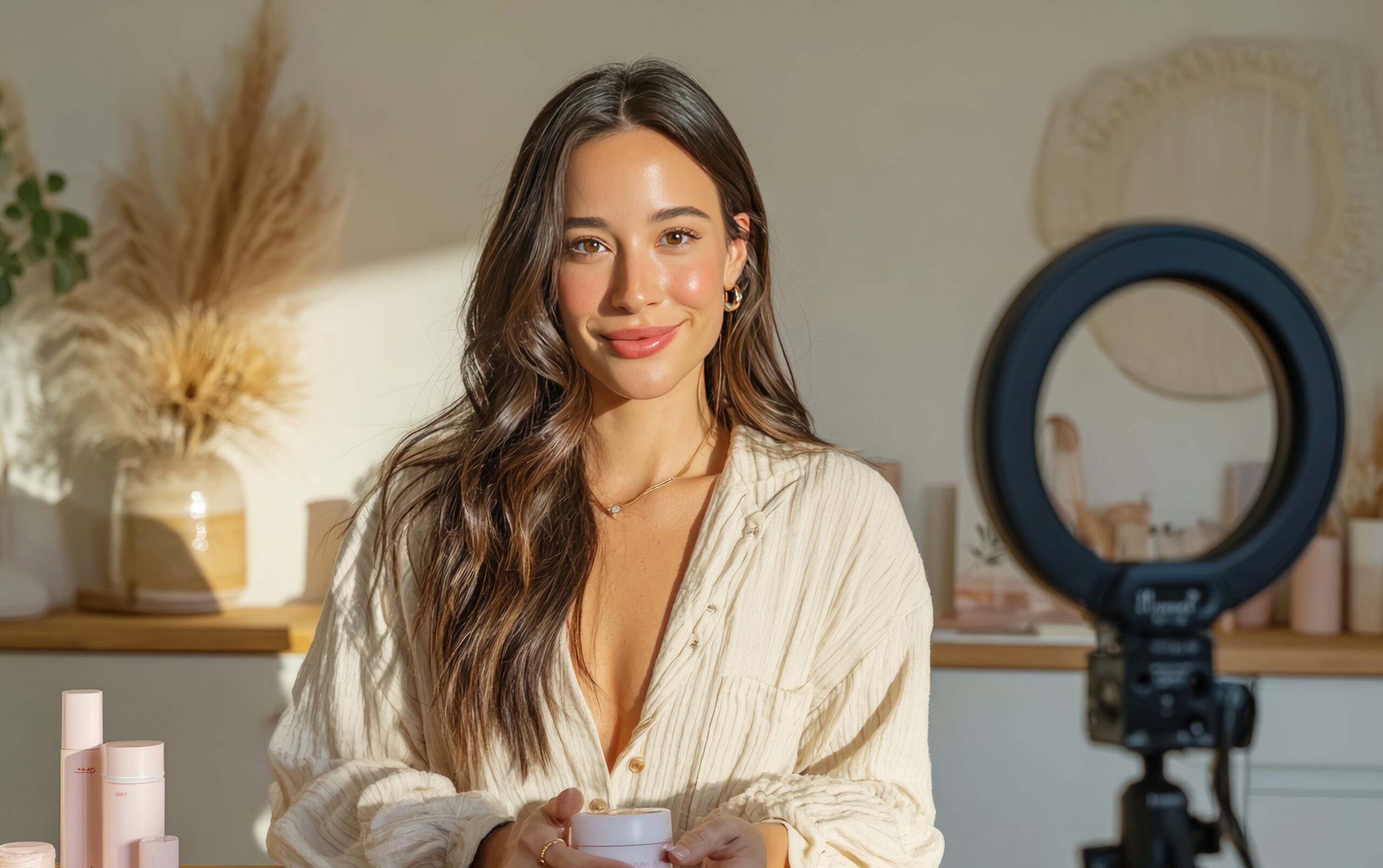
We pulled this straight from the UGC Summit’s Camera Confidence masterclass, a conversation between two creators who’ve been in the game for years. Annette, a New York-based lifestyle creator, and Kailyn, a beauty creator who’s been posting for about four years. Both have worked with Skeepers since the start of their creator journeys, and both admitted something most skip about being confident on camera.
Everyone starts out uncomfortable. Yes, everyone.
Kailyn didn’t even talk to the camera when she first started creating.
“Honestly in my early content, I did not even talk to the camera a lot because I was so nervous about it. I did a lot of voiceovers and a lot of just music in the background instead of speaking to the camera because it was just easier for me at the time.”
Annette had the same experience, but for a different reason. She couldn’t stand hearing her own voice.
“In my early days I never did voice over or speaking to the camera. Absolutely not. Just because hearing my own voice kind of cringed me and made me think, do I sound like that?”
If that’s you right now, take it as confirmation, not a red flag. The discomfort isn’t a sign you’re doing it wrong. It’s something everyone goes through.
And it doesn’t fully disappear, even once you’re experienced. Kailyn was upfront about that:
“I will be honest and say sometimes I still feel awkward when I’m creating content. Just being in your room talking to a camera sometimes is just going to feel a little awkward, to be honest.”
The comparison trap and how to climb out of it
Beyond raw camera nerves, both creators talked about comparing themselves to other creators, especially once branded content entered the picture. Kailyn described trying to mimic a “content creator voice” she’d picked up from watching sponsored videos.
“I was like, okay, when I do a sponsored video, it should sound like this because this is how they sound… I definitely did compare myself a lot.”
Annette’s approach to breaking that cycle was to stop measuring your delivery against anyone else’s.
“I don’t really like comparing myself to others. I feel like everyone is so different and unique in our own way. So, I always think about it as – what someone else has to say or how they say it is always going to be different than me.”
If you and another creator made the exact same video with the exact same script, it still wouldn’t come out the same. Your voice, timing, and personality are the differentiator, not a flaw to sand down.
The mindset shift that actually changes things
Both creators pointed to the same reframe as the moment things clicked: stop talking at a camera and start talking to a person.
Annette described the shift like this:
“Through experience and overcoming that mental block, I’m talking like I’m talking to a friend instead of a camera. It helps me so much.”
She traced it back to advice she’d picked up online:
“I have seen someone on TikTok saying, start talking to camera like you’re talking to your friends, and that changed a lot of my perspective, so I don’t sound as robotic.”
Kailyn echoed the exact same idea when asked what she’d want creators to take away from the whole session:
“When you’re recording content, I feel like it’s always best when it sounds like you’re on FaceTime with a friend. It sounds like you’re just talking to someone that you know, telling them about a product that you love, telling them about a story that happened to you.”
If you only take one thing from this whole post, make it this: reframe the camera as a person, not an audience.
Practical techniques that actually make a difference
Beyond mindset, both creators shared specific, repeatable habits they use to feel more natural on camera.
Build in pauses instead of rushing.
Annette developed a technique during get-ready-with-me videos where she pauses the camera between actions and thoughts instead of talking non-stop.
“I put on my mascara and I talk, then I pause the camera. Then I put on my blush and talk, then I pause the camera again. So, there’s these little pauses and it doesn’t sound like I’m rushing through my thoughts. I’m really thinking articulately about what I want to say. I feel like that changed the whole game of talking to the camera.”
Slow down on purpose.
Kailyn says she talks fast when she’s nervous, so she consciously forces herself to slow down.
“I always have to speak slower than I think I need to. And it sounds normal to everyone else. To me, it sounds like I am a turtle. But I always speak a little bit slower than I normally would, because if there are nerves, that makes me want to speak quicker and just be done with it.”
Her reasoning: pacing gives you editing flexibility later.
“I usually try and take my time when I’m speaking to the camera, because if there are pauses that are too long, you can cut those out and you can redo it. But if you’re jumbling and rushing, it makes me more nervous and anxious. It just makes the process so much tougher to get through.”
Keep the camera rolling through mistakes.
Instead of stopping and restarting every time she flubs a line, Kailyn lets the clip run and talks through it.
“If I mess up, I just keep going and talk through it instead of pausing and re-starting, because it becomes more of a mental block if I restart.”
Her logic doubles as one of the best confidence reframes in the whole session:
“Nobody is going to see all your footage. They’re only going to see the piece that you put out. So, nobody’s going to know if you messed up five times, if you messed up 20 times, if you did it perfectly the first time.You have all the control as far as editing goes in what is put out there. So, there’s no reason to be nervous with what we’re filming, because nobody’s going to see this but you.”
Read that last line again. Nobody sees your outtakes. Only the final cut exists in the world.
Give your hands and your face something to do.
Kailyn also shoots her B-roll before she films any talking segments, partly for logistics and partly as a confidence warm-up.
“I get all of my B-roll first, to me that kind of is just like looking in a mirror. I’m like, ‘oh my gosh, I look so cute.’ And then I feel like that kind of loosens me up a little bit to be like, ‘okay, I feel confident about this.’ And then I can talk.”
She does the same with physical products, to avoid the classic “what do I do with my hands” spiral:
“I always try to make sure I have something to do with my hands. So even if it’s just a video where I’m talking about the product, I make sure I have the product in my hands.”
Have a pre-filming ritual.
Annette’s routine is less about content and more about calming her nervous system before she even hits record:
“I take a very long deep breath… just making sure I’m in the right headspace. And then usually if my husband’s around, I will talk to him first, so I’m a little bit less nervous. I have my drink usually, like I have a teanext to me. That helps a lot.”
None of these are complicated. They’re small, repeatable adjustments. Find the one or two that work for your brain and build them into your process.
What to do when it still feels off (without endless refilming)
Both creators agreed on something that might surprise you: they try not to refilm, even when a take feels awkward.
Kailyn explained why constant retakes can backfire:
“Usually for me, the first couple times is when it sounds the most natural. The more I repeat it, the more it starts to sound like a script. So I try not to refilm as much as I possibly can.”
When a take really isn’t working, her move isn’t to force it, it’s to step away.
“I usually like to step away, just like go outside for a second, take a walk, touch grass, and come back and then restart again.”
Annette takes the same approach on set, especially with branded content:
“I try to do it all on the same day. Unless it’s something that the brand really needs to change, I don’t refilm. It messes with your creativity. You risk overthinking and feeling like you should redo it all again.”
Perfectionism isn’t the goal, and more takes don’t automatically mean a better video. Sometimes the fix is a break, not a redo.
Reframing “cringe” (this one’s a mindset game-changer)
Here’s the part of the session that’s genuinely worth bookmarking. Both creators were asked directly whether the word “cringe” means something different to them now than it did when they started.
Annette’s answer reframes the entire fear:
“After doing it for many years, I see cringe as a sign of growth. If you look at your video a year ago, or like a few months ago, and you don’t cringe at yourself, or you don’t see any difference, then it means you’restagnant, right? You’re not doing anything different. So, now I think cringe is good.”
Kailyn’s definition of cringe evolved too, but toward something more useful than fear of judgment, she now uses it as an internal authenticity check:
“To me, when I look at a video of mine that I’m currently filming and I think that it’s cringey, usually that means that I am not being authentic. That means that I sound too scripted, or this doesn’t sound as natural as you can sound.”
Instead of “cringe” meaning people will judge me, let it mean this doesn’t sound like me yet. It’s a signal to adjust, not a reason to quit.
On worrying about what people think
If part of your hesitation is “what if someone I know sees this,” you’re in very good company. Both creators dealt with this directly, especially early on.
Kailyn was candid about the internal spiral. Her fix, which doubles as genuinely great advice for anyone worried about a broad, faceless audience is to shrink the audience down in your head.
“I try not to think about it as like I’m filming this video for the internet to see. I try to just think about the one person who’s going to stop scrolling and watch the video. If it resonates with one person, that’s perfectly fine. Try not to think about the fact that you’re throwing this into the void and however many people can see it.”
Both creators agreed that the discomfort fades once you stop performing for an imagined audience and start creating for the person actually watching.
Practice isn’t optional
If there’s a throughline across this entire session, it’s that confidence isn’t a personality trait some creators are born with. It’s a byproduct of reps.
Annette’s advice: practice even when nobody will ever see it.
“Practice as much as you can, even though no one is looking at your content. I feel like it will really help build your confidence, and it even makes you find yourself a little more, a little deeper.”
She does this literally by recording videos with no intention of posting them, purely as a rehearsal.
“Sometimes I will record sharing my stories, any niche, and sometimes I don’t even post it. It’s just for practicing. I feel like it’s really helpful.”
And the “just be yourself” advice that gets thrown around constantly? Kailyn pushed back on it in a way every overwhelmed creator needs to hear:
“Be yourself is great advice, and everyone should try to do that as much as possible. But ‘myself’ is very aware that I’m on camera right now, and ‘myself’ knows that I have to hit these points in this amount of time. So, if I’m being myself, I’m just going to be very nervous and anxious the whole time. It didn’t give me clear steps to take to make the content feel more natural.”
The real version of “be yourself” isn’t a switch you flip. It’s something you grow into, one awkward, imperfect video at a time.
The bottom line
You don’t need to feel ready to start. You don’t need to sound polished, look perfect, or have zero nerves before you hit record. Every creator you admire started exactly where you are, and some days, still feel a version of that awkwardness.
The difference isn’t confidence. It’s reps. Talk to the camera like it’s a friend, keep rolling instead of restarting, give yourself permission to sound scripted before you sound natural, and let “cringe” mean growth instead of judgment.
Want to hear the full conversation, including more of Annette and Kailyn’s back-and-forth? Watch the full session replay here: Camera Confidence Masterclass — UGC Summit